
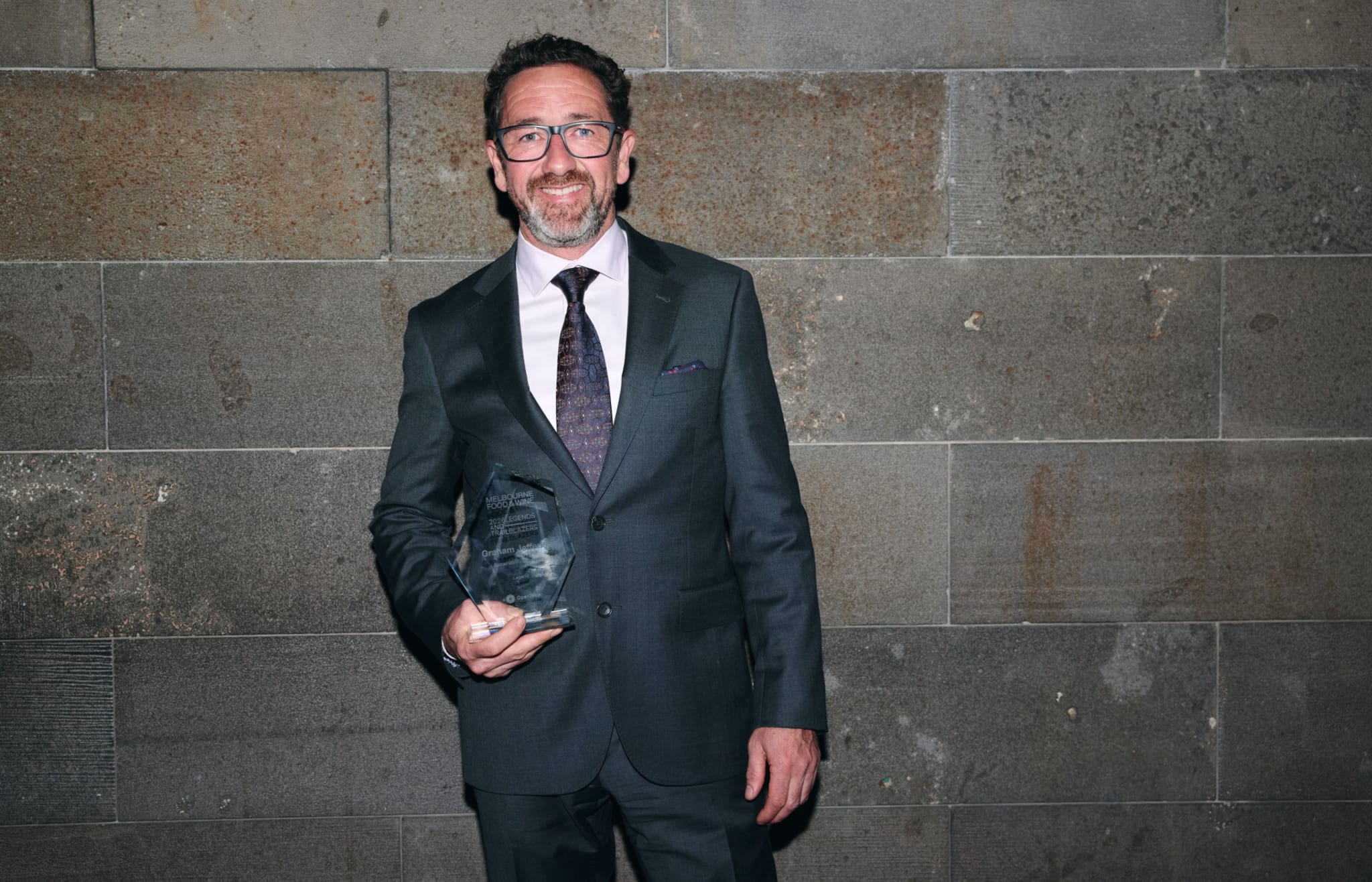
Sustainability Legend – Graham Jefferies, Samesyn 2.0
Samesyn started life much like any other restaurant, albeit one that quickly earned acclaim from its Surf Coast home. Eventually, however, the restaurant’s name – meaning “togetherness” in Afrikaans – took on a deeper significance when founder and chef Graham Jefferies discovered the scale of food insecurity in the region.
“It was learning the fact that 30 per cent of all our food ends up in landfill, and there’s people down the road that can’t afford to eat. To me, that’s just bananas. So I just wanted to try and do something to help.” Reborn in 2024 with a profit-for-purpose model, Samesyn 2.0 diverts its profits to Feed Me, a local charity that intercepts good food from landfill and cooks around 6,000 meals a week for people in need.
The kitchen now has a strict no-waste policy that extends to being entirely bin-free. Everything that passes through the door is used, composted or redeployed – protein scraps are fermented into garum (umami-rich sauces), for instance. Jefferies even put out a call for the area’s leftover Halloween pumpkins and turned them into molasses for a carrot glaze. Plastic is verboten.
Despite the radical change, it remains a restaurant that commands attention for what’s on the plate. Deprivation? No, you’ll eat like a lord. The retired dairy cow with garum butter – a plate of full flavoured, dry-aged brilliance – is the standard bearer for a restaurant where ethics are threaded through every facet of the operation.
“He’s quietly and unobtrusively trying to make his corner of the world a better place, and his approach is so inspirational,” says Matt Preston. “But doing it without compromising the deliciousness of the meal you’ll eat at Samesyn is a whole other box of slow-roasted, chewy caramel–reclaimed carrots – with lovage and pumpkin glaze, natch.”
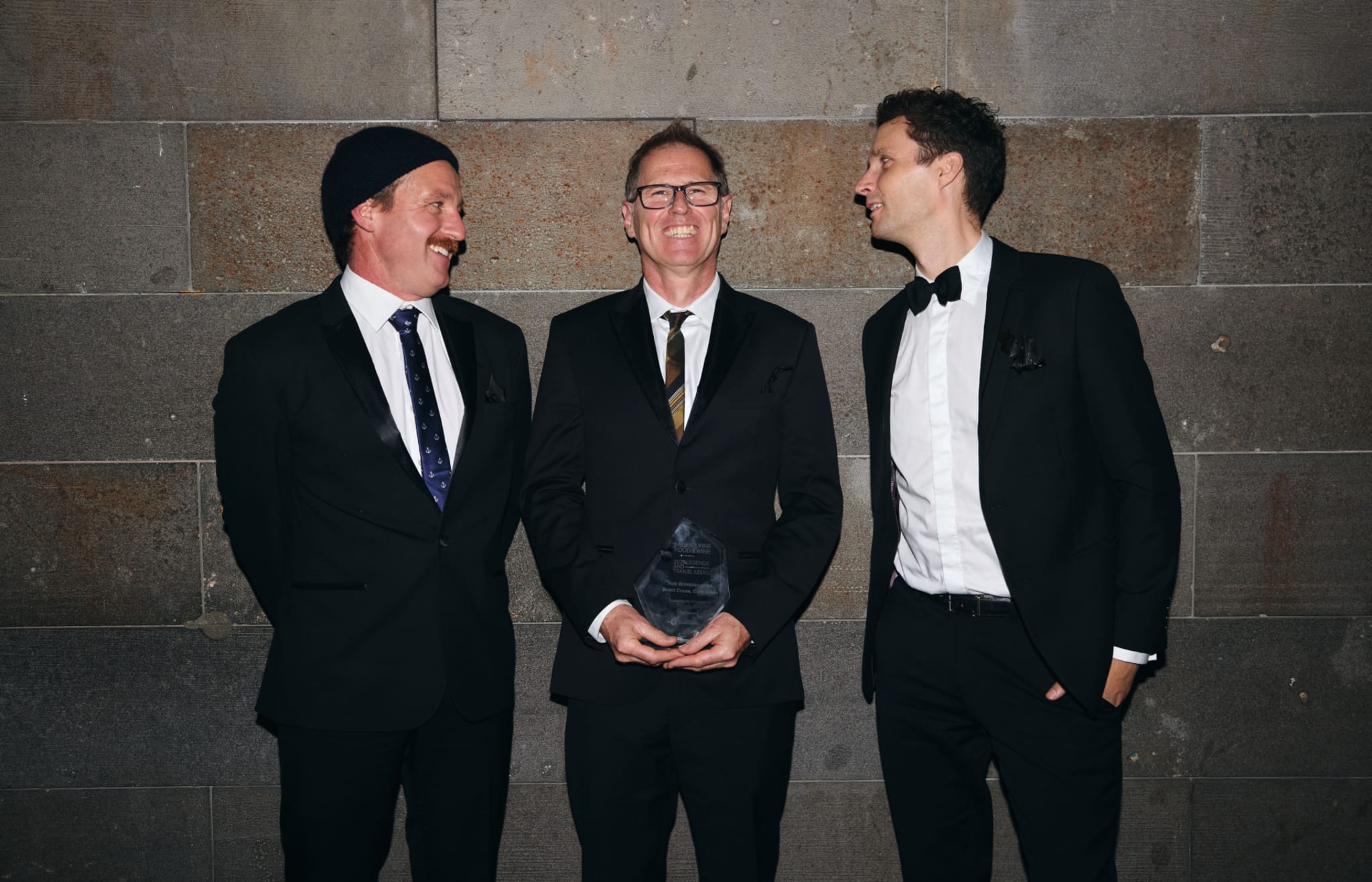
Sustainability Trailblazer – Southern Seagreens
It isn’t always easy being green. As Cam Hines, Rob Brimblecombe and Bert Cross have found in their quest to establish Australia’s first commercial kelp farm, sometimes it’s bloody difficult. But these pioneering sea farmers are ahead of the Antipodean curve. Globally, the industry is worth an estimated $28 billion. Philosophically, they believe it’s time Australia stepped up to the regenerative aquaculture plate. Practically, they’re doing it.
Based on the Mornington Peninsula, Southern Seagreens cultivates native giant kelp within the Flinders Aquaculture Reserve. It also harvests wild-growing wakame – a fast-growing and invasive species that crowds out indigenous kelp – and turns the seaweed into dried superfoods and seasonings. Densely nutritious – protein, calcium, you name it – the seaweed is great for humans. It’s equally beneficial for the environment.
The native golden kelp provides habitat for fish, crustaceans and molluscs, and improves the marine ecosystem by sequestering carbon and creating oxygen. In other words, it’s a unicorn product that ticks the boxes of health, sustainability and umami-rich taste.
“What we’re doing is really new for Australia. We’re learning how to breed kelp and farm it at sea, which hasn’t been done commercially before here,” says Hines. The Seagreens process sees them cultivate the juvenile kelp in tanks at their lab in Dromana before the kelp spore is settled on ropes and taken to the offshore farm at Flinders. “It’s like a massive research and development project that we’ve been working on for four years.”
An important part of the challenge is getting word out, and top chefs are getting excited about Southern Seagreens. “They’re amazing. They’re doing hard and important work with the best mode of communication: food,” says Trailblazer and zero-waste champion Jo Barrett. “I feel very grateful to have them in Victoria – and from a chef’s perspective, to have access to hand-dived Australian ingredients.”
Presented by

In Partnership with
