
Matcha scores another moment in Raymond Tan's outrageously extra panna cotta.
“I was testing matcha recipes for Nimbo, the dessert shop I have with my cousin Chian, who also runs a matcha shop called Matcha Mate with her wife Belle, when I came up with this recipe,” says Raymond Tan. “It’s now a regular seasonal item that we serve in spring and summer. The only really hard part about panna cotta is the recipe testing, when it’s all about getting the ratios right for the perfect texture. Once you’ve got that down, it’s really straightforward to make. At Nimbo, we top ours with red bean paste and skewered dango, the sweet Japanese rice balls, but it’s just as delicious on its own.”
Ingredients
Makes four small panna cottas
- Oil spray, for greasing
- 7 g (¼ oz) silver gelatine leaves
- 250 g (9 oz) thickened (whipping) cream
- 100 g (3½ oz) milk
- 65 g (2½ oz) caster (superfine) sugar
- 3 g (½ teaspoon) vanilla extract
- 7 g (3½ teaspoons) matcha powder
- Red bean paste (optional; recipe follows), to serve
- Skewered dango (optional; recipe follows), to serve
Method
- Lightly grease four 120 ml (4 fl oz) dariole moulds or ramekins with oil spray.
- Submerge the gelatine leaves in a bowl of cold water and stand until bloomed, about 5–10 minutes. The sheets are ready once they’ve softened and are soft enough to squeeze.
- Meanwhile, combine the cream, milk, sugar and vanilla in a saucepan, place over medium heat and bring to a gentle simmer.
- Squeeze as much water as possible from the gelatine leaves, then add the gelatine to the simmering cream. Continue to simmer, swirling, until the gelatine melts, about 10 seconds. Remove from the heat and stand at room temperature until warm to the touch, about 15 minutes.
- Add the matcha powder and stir until there are no lumps. (Waiting until the mixture has cooled to add the matcha will help retain the powder’s vibrant colour and prevent the matcha from settling at the bottom of the mould.)
- Pour the liquid into the moulds, cover with plastic wrap, and chill until set, about 6 hours.
- To unmould, briefly dip the base of each mould into hot water (don’t let any water touch the panna cottas), then invert them onto a plate. Or serve them in the moulds topped with red bean paste and skewered dango, if you like. The panna cottas will keep refrigerated, in their moulds, for 2 days
Red bean paste
Ingredients
- 200 g (7 oz) dried red beans
- 100 g (3½ oz) neutral oil
- 75 g (⅓ cup) caster (superfine) sugar
- 75 g (⅓ cup firmly packed) light brown sugar
- 20 g (¾ oz) maltose syrup
- Finely grated zest of 1 orange (optional)
Method
- Place the red beans in a large, deep saucepan and cover them with water until the water level is about 5 cm (2 inch) above the beans. Bring to the boil, then reduce the heat to medium and simmer, topping up water as needed, until the beans are broken apart and can be easily mashed between your fingers, 45 minutes to 1 hour.
- Strain the beans, reserving the liquid. Let the cooking liquid sit for 30 minutes: it should separate into clear water and sediment. Discard as much of the clear water as possible and reserve the sediment, then place the sediment and the strained beans in a food processor and blitz until smooth.
- Add the red bean purée, oil, caster sugar, brown sugar, maltose syrup and orange zest to a saucepan and place over medium heat. Cook, stirring, until the oil is incorporated into the beans and the paste starts to pull away from the pan, about 30 minutes. Remove from heat and transfer to a bowl to cool. Red bean paste will keep in an airtight container in the fridge for a week or frozen for a month.
Skewered dango
Ingredients
- 125 g (4½ oz) glutinous rice flour
- 15 g (½ oz) tapioca flour
- 30 g (1 oz) caster (superfine) sugar
- 2 g (½ teaspoon) fine salt
Method
- Add all ingredients and 80 g (¹⁄³ cup) water to a bowl, mix them together, then knead with your hands until a dough forms.
- Fill a small saucepan with water and bring to the boil. Take about 25 g (1 oz) dough, roll it into a ball, flatten it with the palm of your hand, and drop it into the water. Boil for 1 minute, then remove with a slotted spoon. Add the cooked dough into the raw dough and knead for about a minute. This gives the dough a little elasticity, which will help with shaping.
- Portion the dough into 15 g (½ oz) pieces, then roll them into balls with your hands. Bring the pot back to the boil, then boil the dango for 1–2 minutes until they float to the surface. Remove with a slotted spoon and drain.
- Skewer three or four dango onto long toothpicks and serve.
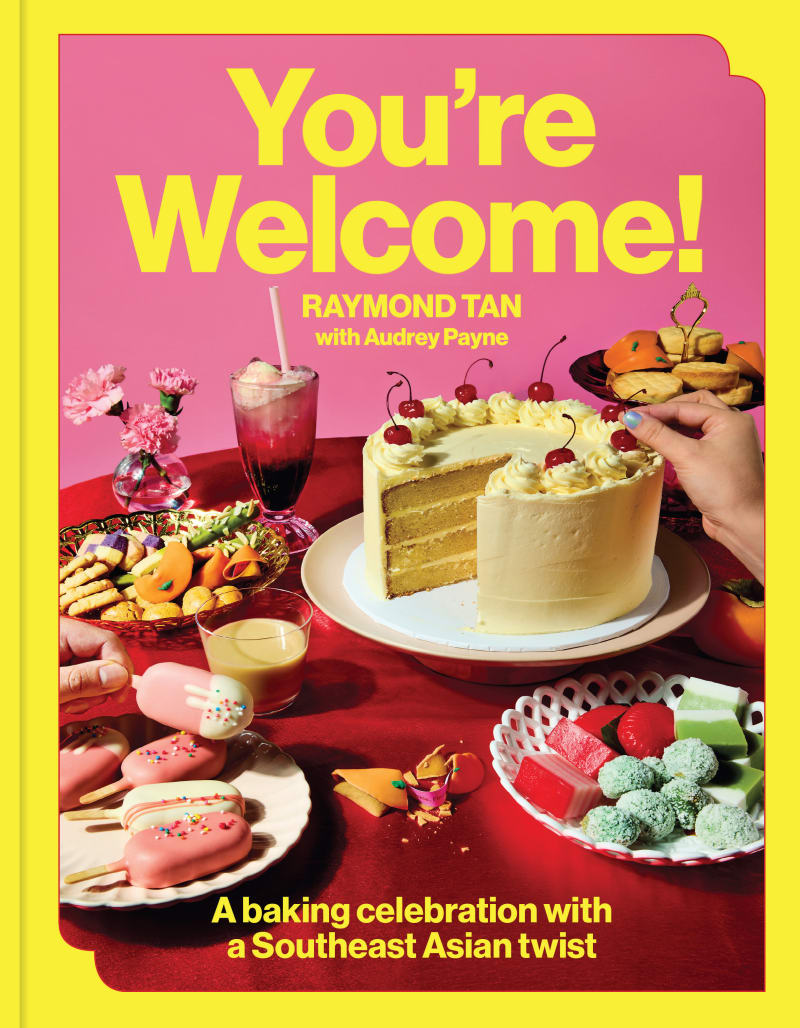
Images and text from You’re Welcome! by Raymond Tan with Audrey Payne, photography by Louise Hagger. Murdoch Books RRP $49.99. Available in stores nationally including at great independent retailers such as Readings, Hill of Content and Books for Cooks.